Loading...
Serving Madera, CA and surrounding areas. (559) 481-4073
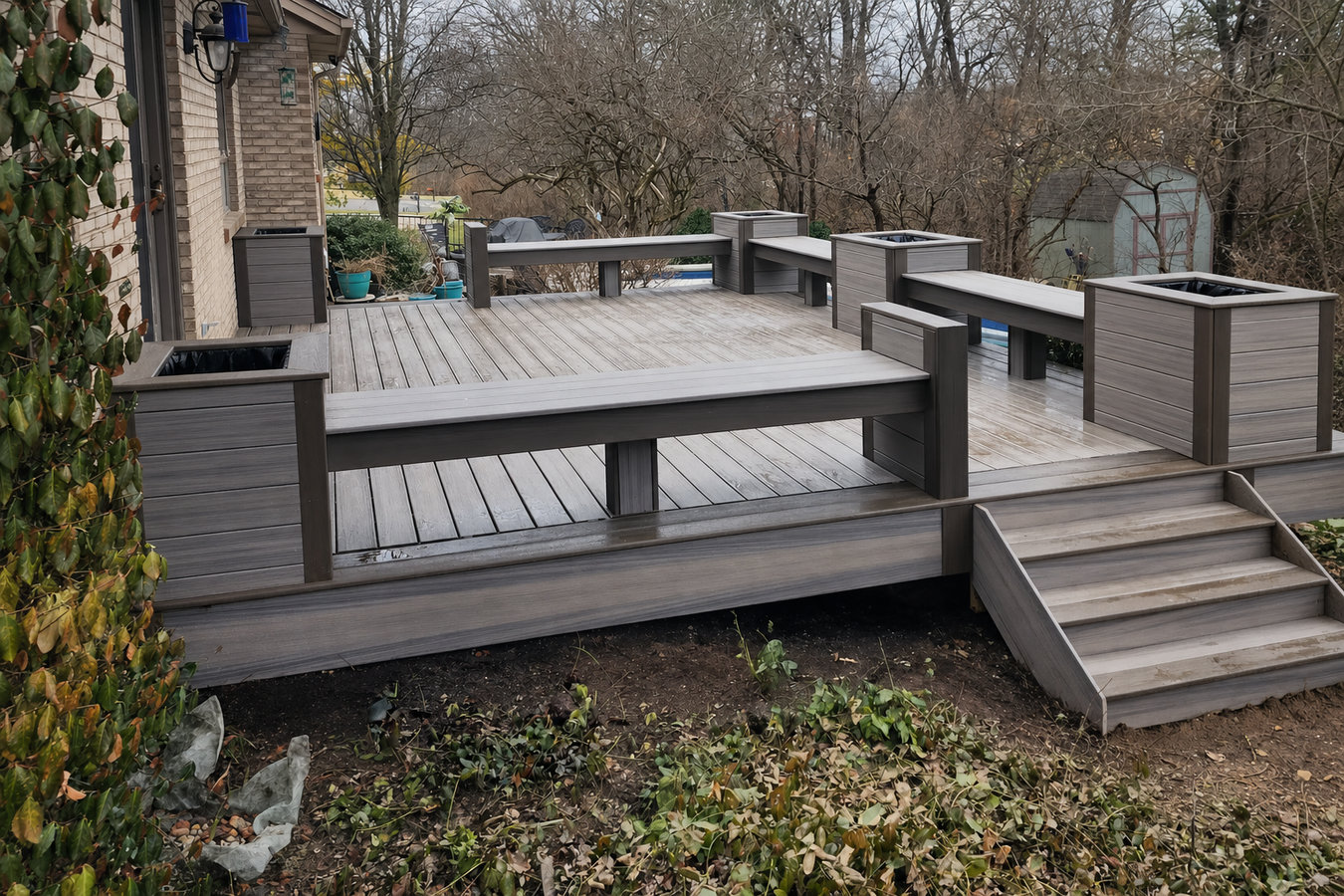
Stop spending spring weekends sanding and staining. A properly installed Trex deck handles Madera summers and tule fog winters with nothing more than an occasional rinse.
Trex deck installation in Madera means building a composite deck - recycled wood fibers and recycled plastic bonded into boards that resist rot, splintering, and UV fading - on a pressure-treated structural frame, with most standard projects running from first contact to final inspection in six to ten weeks. Trex backs its boards with a 25-year limited warranty. The surface looks like real wood but requires none of the annual sanding, staining, or sealing that wood demands.
Most Madera homeowners ask about Trex after years of fighting an aging wood deck - boards that have gone gray, cracked, or soft in the heat - or after watching a neighbor replace a wood deck and wishing they had gone composite the first time. If you are weighing Trex against other composite brands, our composite deck installation page covers the full range. If budget is the main driver and you are open to a wood option, the pressure-treated wood deck construction page lays out what that route looks like in Madera.
Every Trex deck we build starts with a proper pressure-treated frame and footings designed for Madera's clay soils. The composite boards on top get most of the attention, but the frame underneath is what determines whether the deck still feels solid in fifteen years. We pull all permits through the City of Madera and do not start work until they are approved.
If your existing deck boards have turned silver-gray, developed cracks along the grain, or started to splinter underfoot, the wood has reached the end of its useful life. Madera's intense summer UV breaks down wood surfaces faster than in cooler climates, year after year. A Trex replacement ends that cycle entirely.
If sanding, staining, or sealing your deck has become a chore you dread every spring, the material is not working for your lifestyle. The combination of Madera's hot summers and foggy winters means wood decks often need attention twice a year just to stay presentable. Switching to composite eliminates that maintenance routine almost entirely.
A deck that flexes noticeably when you walk on it, or has boards that feel soft when pressed, has structural or rot damage below the surface. This is especially common in older Madera homes where the original deck was built with under-treated lumber. That kind of damage does not fix itself - it gets worse, and it can become a safety issue.
Boards that have cupped at the edges, bowed along their length, or pulled away from their fasteners are telling you the material has failed. In Madera's climate - soaking wet during fog season, bone-dry in summer - wood expands and contracts dramatically and eventually loses that fight. The longer you wait, the more stress transfers to the frame underneath.
Trex offers several product lines that range from entry-level boards to premium collections with deeper grain patterns and a wider color palette. The installation process is identical across lines, so the choice comes down to appearance and budget. We carry samples and show you each option in your actual outdoor light before you commit. If you are comparing Trex against a wider field of composite options, our composite deck installation page covers them all. If you are weighing composite against a lower-cost wood deck, the pressure-treated wood deck construction page explains what that route looks like here in Madera.
Beyond board selection, the main decisions on a Trex project are fastening system and railing style. Hidden clips leave the deck surface looking clean - no visible screws - and are worth the modest cost upgrade for most homeowners. Trex makes matching composite railing systems that carry their own warranty and pair well with any board line. We walk through all of these choices at the estimate visit so nothing is decided under pressure once work has started. According to Trex Company, using the correct fastening method is required to maintain warranty coverage on composite boards.
Suits homeowners who want composite durability and low maintenance at the most accessible price point.
Suits most backyards - deeper grain patterns and more color options at a step up from entry-level, without the premium price.
Suits homeowners who want the most realistic wood appearance and the strongest warranty for a high-visibility outdoor space.
Suits anyone who wants a clean, screw-free surface - a small upcharge that makes a visible difference in the finished look.
Madera sits in the San Joaquin Valley, where summer temperatures regularly top 100 degrees and UV exposure is intense for months on end. That is one of the main reasons wood decks in this area age faster than national averages - boards dry out, crack, and go gray more quickly than they would in a coastal climate. Composite boards resist UV fading far better than wood and do not require the frequent sealing that Madera summers demand. Board color matters here more than most places: lighter Trex tones absorb less heat and stay more comfortable underfoot on the hottest days. Homeowners in nearby Chowchilla and Kingsburg face the same climate conditions and weigh the same material decisions when choosing between wood and composite.
Madera winters bring the Central Valley's tule fog - weeks of heavy, ground-level moisture that keeps outdoor surfaces damp for extended stretches. Wood soaks up that moisture and dries hard when summer arrives, repeating a cycle that warps boards and promotes mold. Composite boards do not absorb water the same way, which is why Trex-surfaced decks generally come out of fog season looking far better than their wood counterparts. The clay-heavy soils under most Madera yards add one more factor: footings need to be set deep enough to stay stable through the soil's seasonal swelling and shrinking, and we account for that on every project we build here.
We ask a few basic questions - roughly the size you have in mind, whether you have an existing deck, and what you plan to use the space for. We respond within 1 business day and schedule a site visit at your convenience.
We come to your property, take measurements, and walk through Trex product lines and color options with physical samples. You see how the boards look in your actual outdoor light before committing to anything.
We put together an itemized written quote and submit the permit application to the City of Madera Building Division. If your neighborhood has an HOA, we help you prepare that architectural review submission too. No work starts before permits are approved.
Once permits are in hand, we dig footings sized for Madera's clay soil, frame the structure, and install the Trex boards. A city inspector signs off, then we walk you through care and warranty documentation before we leave.
Free estimates, written quotes before any work starts, and permit handling included. We respond within 1 business day.
(559) 481-4073We prepare drawings and submit them to the City of Madera Building Division, then track the application through to approval. You never have to visit City Hall or wonder what is happening. Every deck we build is fully permitted, inspected, and documented.
Most of Madera sits on expansive clay soils that swell when wet and shrink in the dry summer. We set footings at the depth and diameter needed to keep your deck level and stable through that seasonal movement - not just at minimum code. This is the work that determines whether your deck holds up for decades.
We have been building in Madera and the Central Valley since 2016. That means we know the local building department, the soil conditions across different neighborhoods, and which Trex board colors stay coolest underfoot in our summers. Local experience shapes every project we take on.
Trex board color affects how hot your deck gets on a 105-degree afternoon - and we walk every customer through surface temperature differences before any order is placed. The North American Deck and Railing Association notes that material selection matched to local conditions is one of the top factors in long-term deck performance.
Every one of these details comes from building decks in Madera for years - not from a franchise manual. When you call us, you get a contractor who has already solved the problems your specific yard and neighborhood are likely to present.
Considering a wood deck as a budget-friendly alternative? Pressure-treated construction is a proven option for Madera homeowners when it is properly built and sealed.
Learn MoreComparing Trex against other composite brands? Our composite deck installation service covers the full range of board options and hidden fastener systems.
Learn MoreDecking season in the Central Valley fills fast - reach out now and we will have a written quote ready within days of our site visit.